Signs You Have Mice or Rats in Your Home
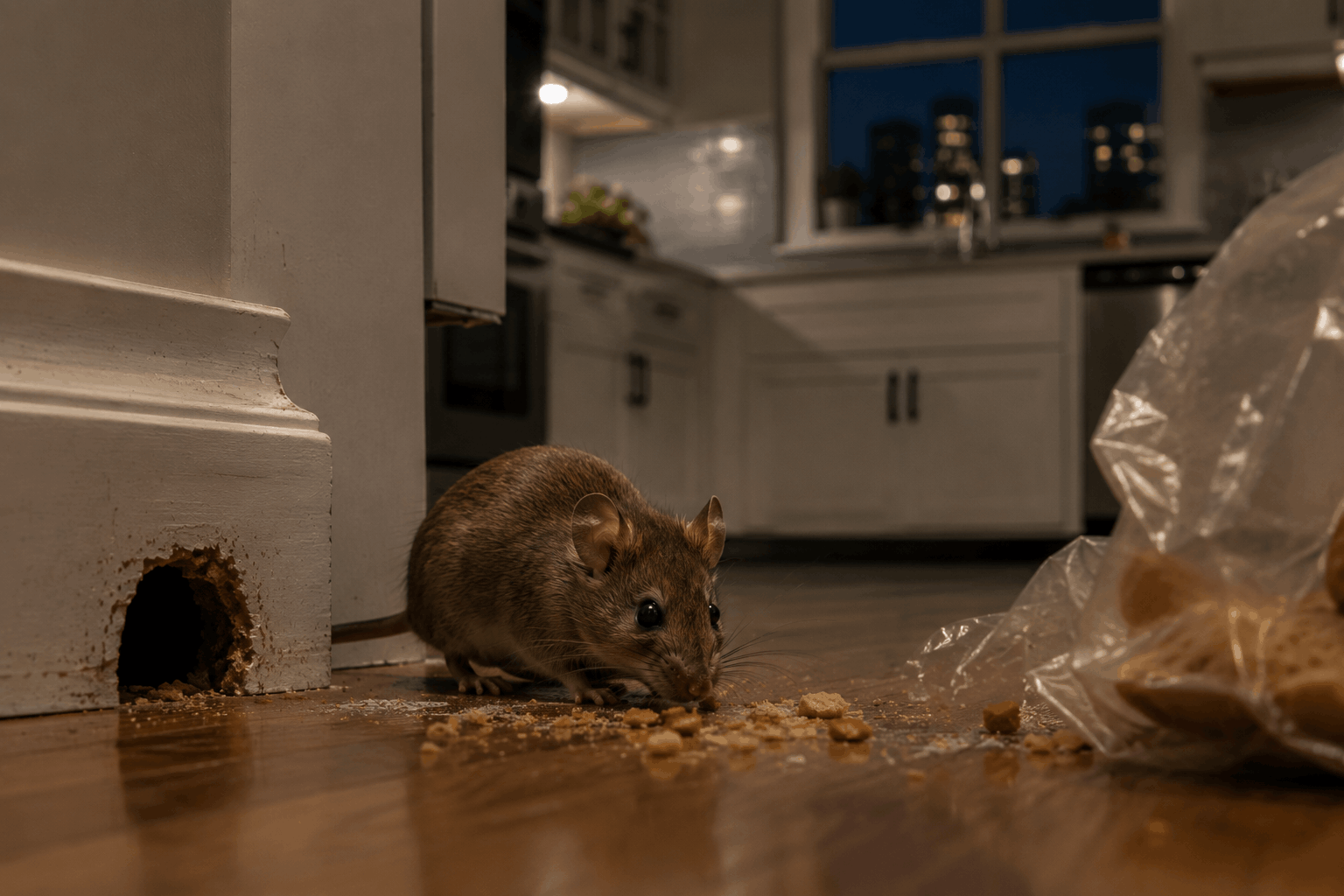
Rodent problems rarely have obvious beginnings. Mice or rats often enter a home quietly through small holes near pipes or foundations, remaining out of sight. Once inside, they settle in and start breeding. Many homeowners only realize they have rodents after the issue escalates.
Understanding the warning signs early can prevent serious damage, health risks, and costly repairs.
Noises Coming From Walls or Ceilings at Night
One of the first signs of rodent activity is sound. Scratching, light tapping, or scurrying noises often occur late at night when the home is quiet. This is when mice and rats are most active.
At first, these sounds are easy to dismiss as normal house noises. Over time, they become more frequent and harder to ignore. This usually indicates rodents nesting in walls, ceilings, or attics.
Early inspection is the best response. Ignoring repeated noises allows rodents more time to spread.
Droppings Found in Hidden Areas
Mice inspect areas where noises are heard. Use a flashlight to look into attics, basements, and behind walls. If noises continue, set traps or contact rodent control services immediately. The eyes of a mouse are tiny and really dark.
On the other hand, rat droppings are bigger and look thicker. You can usually find these droppings in your kitchen, pantry, basement, and along your home's baseboards.
The thing about droppings is that they show up in areas that aren't cleaned every day. When you see droppings, it means rodents are walking through the space and leaving dirty surfaces. Rodent droppings are a deal because they mean that rodents are really moving around and contaminating things.
When you find droppings, you need to take action. This is very important for reducing your health risks and preventing the problem from getting worse. Droppings can be very harmful to your health, so taking action is necessary to address them and keep everyone safe.
Chewed Items and Gnaw Marks
Mice and rats are always chewing to keep their teeth from getting too long. They chew on all sorts of things, like food boxes, cardboard, the stuff in walls to keep houses warm, and even the wires that carry electricity.
This is a problem, and it does a lot more harm than just making things look bad. Mice and rats can cause damage with their constant chewing.
If you have chewed wires, that is a problem because it can increase the risk of a fire. You should also get rid of any contaminated food. When you see materials that are often a sign that something is using them to make a nest, that usually means you have an established infestation of rodents or other pests.
Chewed wires and contaminated food are. Serious issues that need to be dealt with and shredded materials can be a sign of a bigger problem, with an infestation.
You need to get rid of mice when you see that they have been chewing on things. Mouse exterminating services are really good at this. People often call them when they notice mice causing damage by chewing.
Grease Marks Along Walls and Floors
Rodents like to use the routes over and over. When they walk along the walls and the baseboards, the oil from their fur makes marks. You can see these trails near the places where rodents get into the house, behind things like the fridge, or in the areas where we store stuff. Rodents tend to follow the paths, so we often find these dark smudge marks in the same spots.
These marks indicate that rodents are often in this area and have already found their way around the home. These marks indicate that rodents are very active and have entered the home.
Sealing access points and treating nesting areas is necessary to stop repeated travel.
Unusual Pet Behavior
Pets often notice rodents before. Seal entry points with caulk or steel wool. Clean greasy marks using a disinfectant. Check regularly for new marks to track rodent activity and re-seal if needed. Corners or appliances. These reactions usually happen because animals hear or smell rodent movement.
Ignoring sudden changes in pet behavior can delay detection. Pets often provide an early warning sign that should be investigated.
Investigate any changes in pet behavior immediately. Inspect the area where your pet is focused, and set traps if you see signs of rodents. Monitor pets closely for more reactions. Rats are usually hidden in attics, basements, crawl spaces, or wall voids.
Finding shredded materials in unusual locations often means rodents have settled nearby. Removing the nest without addressing the rodents themselves will not solve the problem.
Persistent Musty or Urine Odors
A persistent musty smell, especially in confined spaces, is a sign of rodent activity. Strong odors often signal a larger, long-term infestation.
This stage typically requires professional inspection. A trusted mouse exterminator that Cleveland homeowners rely on can locate the source and eliminate the issue safely.
Why Rodents Keep Returning
Rodents return when food, shelter, and access remain available. Small gaps around doors, vents, and utility lines provide entry. Cluttered storage areas offer nesting opportunities.
Effective control requires exclusion, sanitation, and monitoring. Treating visible rodents alone does not prevent reinfestation.
The Cost of Ignoring Early Signs
- Rodent infestations worsen over time. The health risks grow as bacteria spread.
- Rodent infestations cause property damage. This damage gets worse.
- The cost of repairs for damage caused by rodent infestations increases over time.
- Early detection and intervention cost less and prevent long-term damage.
- Homes that act quickly experience fewer recurring issues.
Frequently Asked Questions
How can I tell if I have mice or rats in my home?
- Common signs include droppings, scratching noises at night, gnaw marks, grease trails, nesting materials, and unusual pet behaviour.
Are mice and rats dangerous to health?
- Yes. Rodents contaminate food, spread bacteria, and can worsen allergies and respiratory issues.
Can I handle a rodent problem on my own?
- Small issues may seem manageable, but infestations often require professional treatment to remove nests and seal entry points.
How often should homes be inspected for rodents?
- Regular inspections are recommended, especially in older homes or properties near food sources or with high rodent activity.
Rodent infestations rarely disappear without action. When warning signs are recognized early and addressed properly, long-term control becomes possible and sustainable.