Why Store-Bought Rodent Traps Don’t Work for Cleveland Homes
Walk into any hardware store in Cleveland, and you will see shelves packed with rodent traps. Snap traps. Glue boards. Ultrasonic devices promise miracles. They look simple. Cheap. Convenient.
But here’s the truth: most homeowners learn the hard way. They rarely solve the real problem.
In Cleveland homes, rodents behave differently. Older structures. Seasonal weather swings. Dense neighborhoods. All of it changes the game.
Let’s break it down.
Cleveland Homes Are Built for Rodents
Many homes in Cleveland were built decades ago. Some over a century ago. Stone foundations. Aging crawl spaces. Gaps around utility lines that nobody notices.
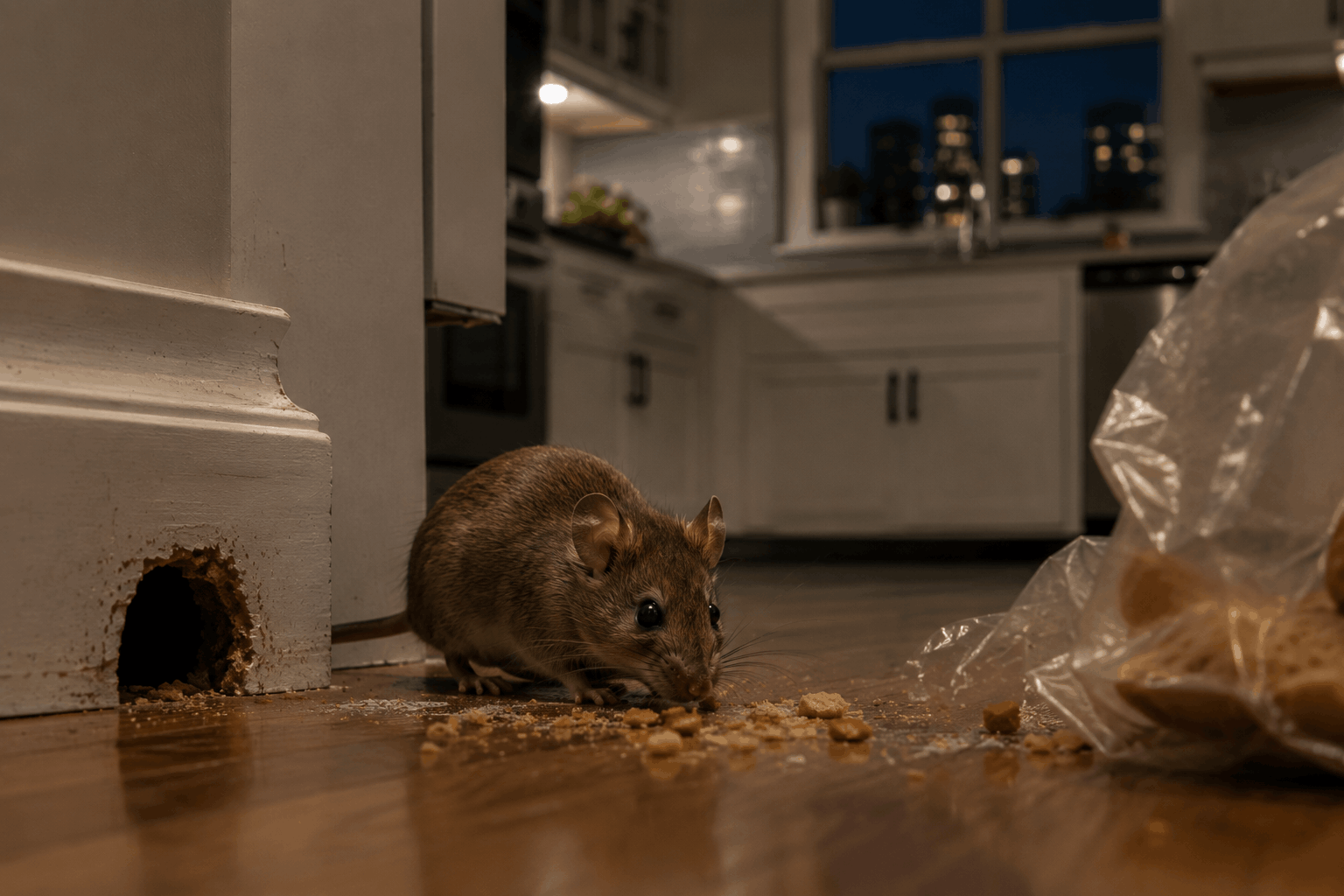
Store-bought traps only address what you can see. One mouse in the kitchen. Maybe two. Studies have shown that homes built in the 1920s, such as many in Cleveland, can have an average of 10 to 15 entry-point gaps, which rodents exploit. These unsealed gaps make it easy for more mice to enter, ensuring that trapping alone remains ineffective.
But the real issue is behind the walls. Under porches. Inside basements that stay damp year-round. Traps don’t seal entry points. They don’t stop nesting. They don’t eliminate breeding cycles.
You catch one. Three more move in. Quietly.
Cold Weather Makes the Problem Worse
Cleveland winters push rodents indoors fast. When temperatures drop, mice and rats don’t wander. They invade. Homes near wooded areas, rail lines, or older sewer systems see this every fall.
Store traps react too late. By the time you set them, rodents are already established. Nesting. Chewing. Contaminating insulation.
That’s why professional mice exterminators in Cleveland focus on prevention first, not reaction.
Traps Ignore Behavior Patterns
Rodents in Cleveland are smart. They adapt. Especially in neighborhoods where pest control is common. Many mice avoid unfamiliar objects entirely. Glue traps dry out in basements. Snap traps misfire on uneven flooring.
And ultrasonic repellents. Honestly. They don’t work in real homes with walls, furniture, and multiple levels. Sound doesn’t travel the way the box claims.
Rodents learn quickly. Traps stay empty. Frustration builds.
Health Risks Are Often Overlooked
Dead rodents create new problems. Odor. Flies. Secondary pests. When a mouse dies inside a wall cavity, you don’t remove it with a store-bought solution. You live with it.
Rodents also carry bacteria and allergens that spread long before traps ever snap. Droppings in basements and garages contaminate surfaces most families never think to clean. A single gram of droppings can contain up to 70 allergens, posing significant health risks to the unsuspecting household.
This is where proper rodent control, Cleveland professionals take a different approach. Inspection. Identification. Exclusion. Sanitation. Then elimination.
Cleveland Neighborhoods Create Shared Infestations
Rodents don’t respect property lines. In tightly packed Cleveland neighborhoods, mice move between homes, garages, and apartment buildings with ease.
Trapping inside one home without addressing surrounding access points is temporary at best. The source remains active. New rodents arrive.
This is why one-off solutions repeatedly fail in urban and suburban Cleveland.
What Actually Works
Effective rodent control in Cleveland homes requires a full system. Locating entry points. Sealing foundations. Addressing moisture. Removing nesting zones. Then, targeted treatments are designed for the structure itself.
It’s not dramatic. It’s methodical. And it lasts.
Store-bought traps offer the illusion of control. Real solutions require experience, local knowledge, and understanding of how rodents behave in Cleveland specifically.
Shortcuts feel cheaper. Until they aren’t.