How to Catch a Mouse in Your House
If you've found a mouse in your house, a snap trap is one way to catch it. Put a small amount of chunky peanut butter on the bait pan and place the trap on the floor against a wall where you've seen droppings or other signs of mouse activity. Follow the trap's instructions and keep traps and bait out of reach of children and pets.
Check the trap daily. If you catch a mouse, wear rubber or plastic gloves when handling the trap and cleaning the area. At G & G Exterminating, we can also help if you continue finding mice or signs of activity after setting traps. A single catch does not always mean the problem has been resolved, especially if mice have access to food, shelter or entry points around your home.
What's The Fastest Way To Catch A Mouse?
If you want to catch a mouse quickly, using several snap traps can shorten the time it takes to deal with the problem. The University of California's pest management program (UC IPM) recommends using enough traps to make the trapping period short and decisive. Check the traps every day and keep trapping until there are no more signs of mice.
The CDC recommends snap traps instead of glue or live traps. Glue and live traps can cause mice to urinate when stressed, which may increase your exposure to germs. If you're still finding mice after trying traps, we can inspect your home, find where they're getting in and help address the problem.
How Do Snap, Glue, Live-Catch And Ultrasonic Mouse Traps Compare?
Not all mouse traps work the same way. Here’s what the sources say about some common options:
- Snap traps: The CDC recommends snap traps as a way to reduce rodents around the home. They are the recommended option among these choices.
- Glue boards: The CDC advises against using glue boards. UC IPM also notes that adult mice can often detect and avoid the glue, making these traps less reliable.
- Live-catch traps: The CDC advises against live-catch traps because they can scare mice and cause them to urinate. This can create additional hygiene concerns.
- Ultrasonic or vibrating devices: There is little evidence that these devices can drive established mice out of a building. UC IPM notes that they should not be relied on as the main solution for an existing mouse problem.
Where Should You Put Mouse Traps?
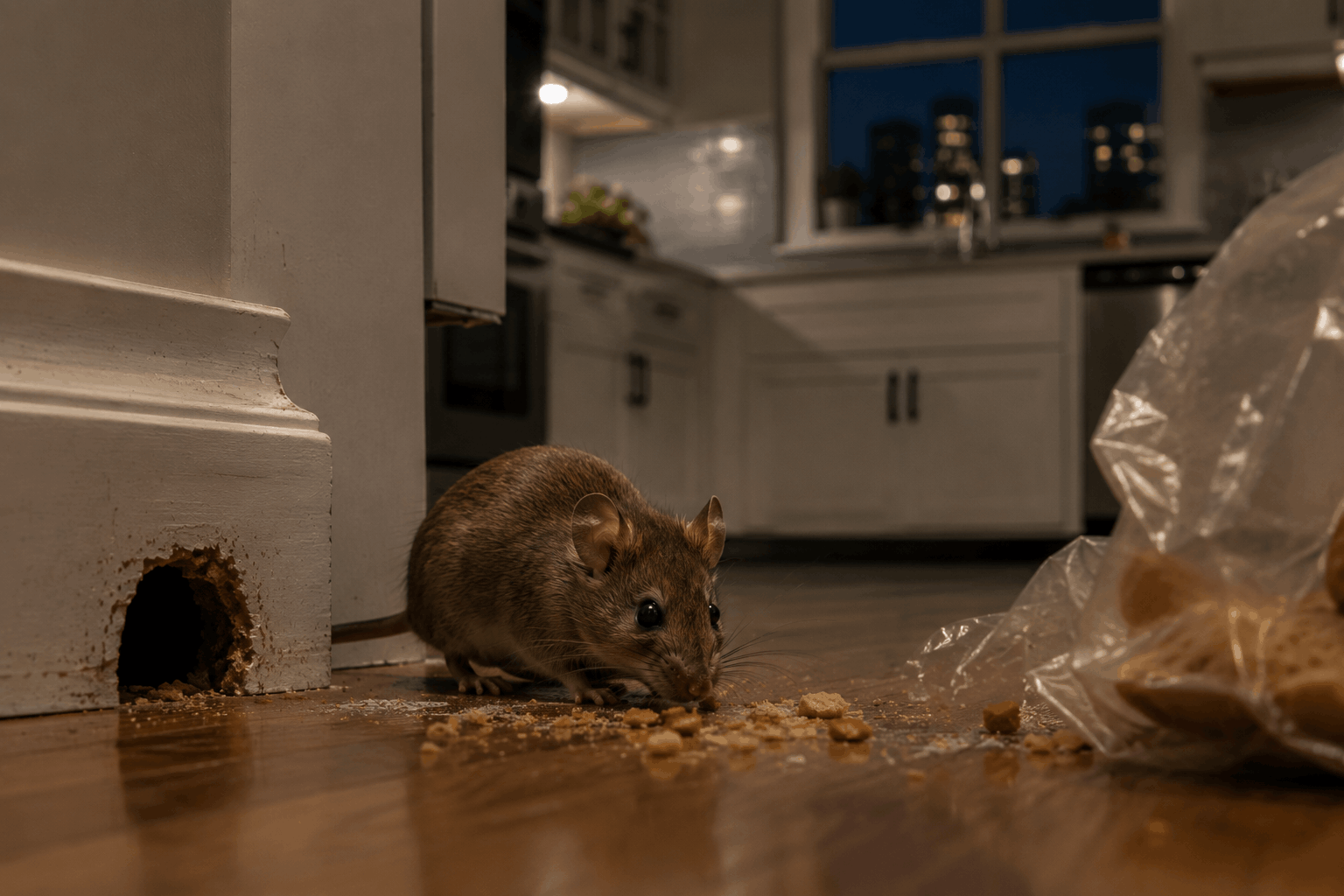
The best place for a mouse trap is somewhere mice are already active. Look for droppings, urine, nesting material, nibbled food or gnaw marks. If you're not sure what you're looking for, you can also check our guide to the signs of mice in your home.
Place each trap on the floor against a wall, away from children and pets. Position the baited end next to the wall so the trap forms a "T." Mice tend to travel along walls rather than crossing open areas, so placing the trap along their usual path gives it a better chance of working. UC IPM also recommends checking behind objects and in dark corners for places where mice may be moving.
House mice seldom travel more than 30 feet from their nest and food. If you find several areas with mouse activity, keep traps no more than about 10 feet apart in those areas rather than concentrating them in one spot.
If you're finding droppings or other signs in several parts of your home, we can help identify where the mice are active and where they're getting inside.
What Bait Works Best In A Mouse Trap?
Chunky peanut butter is one of the baits recommended by the CDC for snap traps. Use only a small amount on the bait pan.
If peanut butter isn't working, UC IPM lists cotton wool or dental floss as another option. The right bait can depend on what the mice in your home are already interested in, so you may need to try a different option if one bait is being ignored.
What Should You Do After You Catch a Mouse?
Follow the CDC's steps for handling a dead mouse:
- Put on rubber or plastic gloves.
- Spray the mouse, any nest and the surrounding area with disinfectant. Let it soak for 5 minutes, or as long as the label says.
- Place the mouse, any nesting material and the trap, if you're throwing it away, in a plastic bag and tie it shut.
- Put that bag inside a second plastic bag and tie that one too.
- Throw it in a covered garbage can that's emptied regularly.
- Wash your gloved hands with soap and water or a disinfectant, take the gloves off, then wash your hands with soap and warm water.
If you want to reuse a snap trap, the CDC says to submerge the trap with the mouse in disinfectant for 5 minutes while wearing rubber gloves. Hold the trap over a plastic bag and lift the metal bar to drop the mouse in, then follow steps 4 to 6 above. Rinse the trap well with water and let it dry completely.
Don't sweep or vacuum droppings or urine, which can send contaminated particles into the air. Open doors and windows for 30 minutes before cleaning. Put on rubber or plastic gloves, then spray the area until it is very wet with a bleach solution or an EPA-registered disinfectant. Let it soak for 5 minutes or as long as the product label says, then wipe it up with paper towels and throw them in a covered garbage can.
Still Catching Mice? When To Call A Mouse Exterminator In Cleveland
Traps can catch the mice already inside, but they don't seal the gaps that let new ones in. Mice also breed fast: a female house mouse can have 5 to 10 litters a year of about 5 or 6 pups each.
Mice can fit through a hole the width of a pencil, about 1/4 inch. The CDC suggests filling small holes with steel wool held in place with caulk or spray foam, and using hardware cloth, cement, lath screen or metal sheeting for larger ones. It also helps to know what attracts mice to a home.
According to the EPA, rodenticide products currently available on the consumer market are ready-to-use bait stations with block or paste bait, while second-generation anticoagulant rodenticides are registered only for the commercial and structural pest control markets. Before buying one, the EPA advises checking that its label covers where you plan to use it.
If fresh droppings keep turning up after trapping and sealing, it may be time to find where the mice are getting in. At G & G Exterminating, we inspect for nesting areas and entry points, then use targeted trapping and treatment, exclusion work and monitoring to address the problem. We also place bait where children and pets can't reach it and check for entry points that need to be sealed.
We’ve been serving Cleveland and nearby communities for over 35 years, including Shaker Heights, Cleveland Heights, University Heights and Beachwood. If you're dealing with ongoing mouse activity, you can schedule a free inspection or call (216) 798-9593. We offer free quotes, and our phone line is open 24 hours with same-day service available.